
Replacing a Mao Biao—the ubiquitous Mao Zedong badge once worn on military uniforms and civilian jackets—isn't just a swap of metal. I've handled dozens of these over the years, and the first thing that strikes you is the weight. Cheap reproductions feel hollow, almost papery. The original badges from the 1960s have a heft that speaks to stamped brass and thick enamel. If you're replacing one for a collection or a uniform restoration, start by knowing what you're replacing. A scratched surface or a loose pin is often fixable. A snapped pin back?That's when replace Mao Biao becomes the only sensible option.
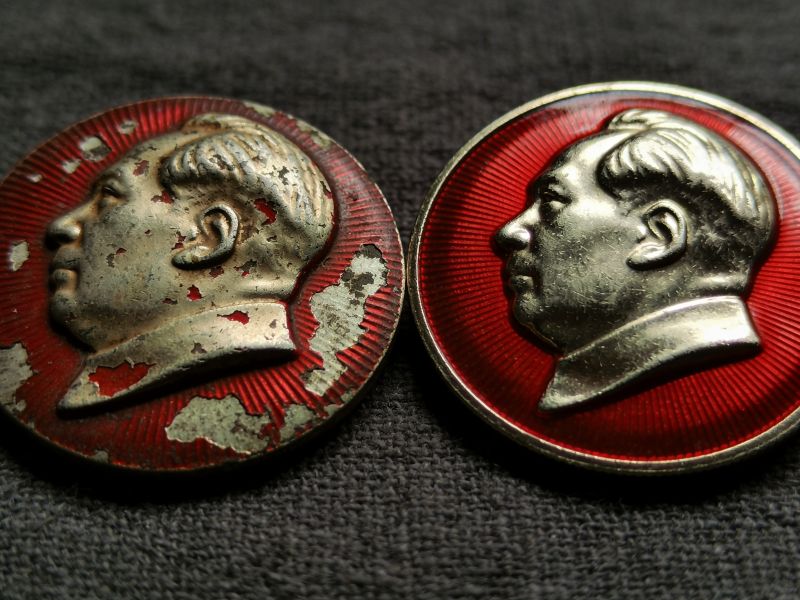
Pay attention to the reverse side. Authentic badges usually carry a maker's mark or a date stamp—sometimes faint, sometimes pressed deep into the metal. I once saw a collector try to replace Mao Biao on a 1967 naval uniform with a shiny modern replica. The front looked fine, but the back had a smooth, unmarked surface. Any experienced eye spots that in seconds. When you replace Mao Biao。match the era. Star-shaped pins from the early Cultural Revolution differ in size and attachment style from the rectangular ones issued later. Measure the original if you still have it. If not, check period photographs—not the famous propaganda shots, but candid unit photos where the badge sits at a slight angle.The replacement itself takes less time than the research. Most badges attach with a simple pin-and-clasp or a screw-back. For screw-backs, hold the badge steady and turn the backing counterclockwise;don't force it, or you'll strip the threads. Pin-and-clasp types need a gentle squeeze—use a small pair of needle-nose pliers with tape on the jaws to avoid scratches. I keep a soft cloth underneath to catch the badge if it slips. One misstep and the enamel chips. Replace Mao Biao only after you've confirmed the new pin's length matches the fabric thickness. A pin that's too short will sag;too long, and it pokes through the lining. Test on a scrap piece of similar material first.
Color matching matters more than most people admit. Faded originals show a dull red, almost brick-like, while modern replacements often use a brighter。glossier enamel. Under direct sunlight, the difference is obvious. I've seen reenactors ruin a convincing uniform with a badge that looked like it came from a souvenir stand. If you're replacing for display, consider a matte finish. For active wear—parades, ceremonies—gloss is acceptable, but avoid the cheap plastic domes. A proper replace Mao Biao job uses enamel over metal, not resin. Run your fingernail along the edge: a sharp, cold rim means metal;a soft, warm edge means plastic.Storage after replacement deserves a word. Moisture ruins the pin mechanism faster than anything else. I keep spare badges in small zip bags with a silica packet—not airtight, just enough to buffer humidity. Check the clasp every few months;
a loose pin can drop a badge into grass or gravel without a sound. That's the quiet failure mode of any replace Mao Biao effort. The badge looks perfect on the shelf, then vanishes at the worst moment. A drop of clear nail polish on the clasp threads (for screw-backs) or a slight bend in the pin (for clasp types) adds security without visible change. Do it once, and you won't think about it again until the next replacement cycles around.