
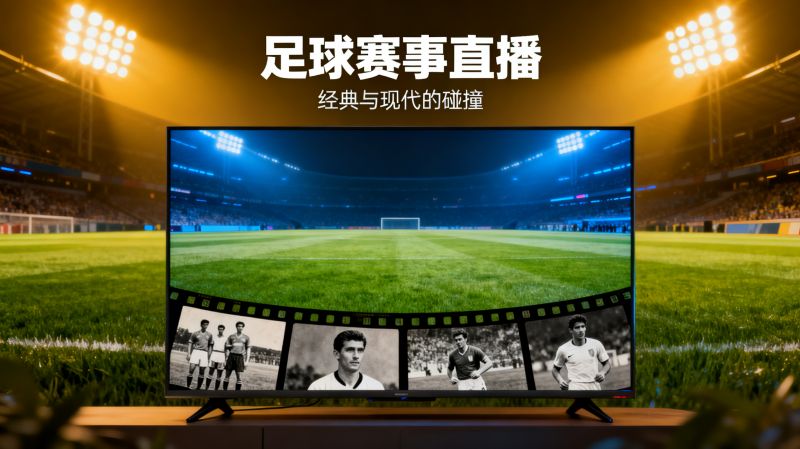
FIFA Plus streaming started in April 2022 as a quiet experiment and has since become one of the strangest corners of the internet for anyone who cares about football's past. I spent a Tuesday night watching the full 1986 quarter-final between Argentina and England, Maradona's second goal rendered in that grainy, slightly washed-out broadcast tape, and paid nothing for the privilege. No subscription wall, no regional blackout, one short ad before kickoff. That experience explains why the platform matters more than its modest press coverage suggests. FIFA Plus streaming is FIFA's own direct-to-consumer channel, free at the point of use。ad-supported, and available in most countries without a cable package or a VPN.The catalogue runs deeper than most people assume. Live coverage leans on leagues that rarely get international distribution — the Mongolian Premier League, Lithuania's A Lyga, second-tier competitions in Asia and Africa, women's fixtures from federations that struggle to sell rights at all. Alongside them sits a documentary library with feature-length player profiles, World Cup behind-the-scenes series。and short-form storytelling produced in-house. Archive material is where FIFA Plus streaming earns its keep, though. Every men's World Cup from 1954 onward is there in full, some matches restored frame by frame, others clearly pulled from whatever master tape survived a storage room in Zurich. Quality swings hard. A 1970 Brazil group game can look sharper than a 1994 knockout tie, which tells you plenty about how broadcast archives were kept before everything went digital.Functionally, FIFA Plus streaming behaves like a modern streamer with the rough edges you would expect from a governing body running its own product. Apps exist for iOS, Android, smart TVs, and the browser. Live streams generally sit at 1080p, and frame rates hold up until a major match floods the servers — I have watched a Women's World Cup qualifier stutter twice in the same half. Advertising runs before kickoff and during halftime rather than mid-action, a small mercy worth acknowledging. Navigation is the weak spot. Browsing by competition works fine. Browsing by era, country。or player does not, and the search bar returns odd results when you spell a name the way a commentator says it instead of the way FIFA files it. Bookmarks and watch history exist but feel like afterthoughts.Strategically, FIFA Plus streaming exists because FIFA watched DAZN, ESPN+, and Paramount+ carve up football rights and decided it wanted a direct line to viewers that no broadcaster could revoke. Free access is the lever. In markets with low pay-TV penetration — Indonesia。
Nigeria, India, large parts of Latin America — an ad-supported service reaches audiences a subscription product never would, and that reach is what gets sold to sponsors. The trade-off is a thinner live portfolio than any paid platform can afford. You will not find the Champions League here, nor top-flight matches from England, Spain, or Italy. What you get instead is depth in the places big rights packages ignore, plus a genuine historical record that no competitor has bothered to assemble.Whether it deserves space on your home screen depends on what you want from it. As a live sports destination it is a supplement, not a replacement, and anyone expecting Premier League fixtures will be disappointed within five minutes. As an archive。it is hard to beat. I would argue FIFA Plus streaming now holds the most complete free collection of World Cup football ever assembled, and that alone justifies the download. The live slate keeps growing each season, the ad load has crept upward since launch, and regional catalogues still differ in ways nobody documents properly. For the price, though, the gaps are easy to live with.